

Frozen embryo transfer is no longer a secondary option in IVF. For many people, it is the planned next step after embryo freezing. Whether embryos were frozen due to medical reasons, timing issues, or as part of a long-term fertility plan, an IVF frozen cycle gives patients the chance to move forward without repeating the most intense parts of IVF.
Still, once embryos are frozen, most people are left with the same question. What actually happens next? This article breaks down frozen embryo transfer in simple terms, without overcomplication or medical fluff, so you know exactly what to expect.
Frozen embryo transfer, also called FET, is the process of placing a previously frozen embryo into the uterus to try to achieve pregnancy. These embryos were created during an earlier IVF cycle and stored using advanced freezing methods.
Instead of transferring an embryo a few days after egg retrieval, frozen embryo transfer happens in a later cycle. This gives the body time to recover and allows doctors to focus only on preparing the uterus, not stimulating the ovaries again.
For many patients, frozen embryo transfer feels physically easier than fresh IVF because the most demanding part has already happened.
An IVF frozen cycle is used for more than convenience. In many cases, it is recommended for medical reasons.
Common situations include:
For example, someone may freeze embryos at 32 and return for frozen embryo transfer a year later when life feels more stable. Others may use frozen embryos after recovering from ovarian hyperstimulation or surgery.
Frozen embryo transfer gives flexibility without lowering the chances of success.
Explore More: The Science Behind Embryo Freezing: Process and Its Impact
Every frozen embryo transfer starts with preparation. Blood tests and ultrasounds are done early in the cycle to check hormone levels and uterine conditions. This step determines how the IVF frozen cycle will be managed.
Some cycles follow natural ovulation patterns. Others use medication to control timing. Neither option is better for everyone. The choice depends on how your body responds and how predictable your cycles are.
The uterine lining is the focus of frozen embryo transfer. It needs to be thick enough and hormonally ready.
This is done in two main ways:
In both cases, ultrasounds are used to confirm that the lining is responding appropriately before moving forward.
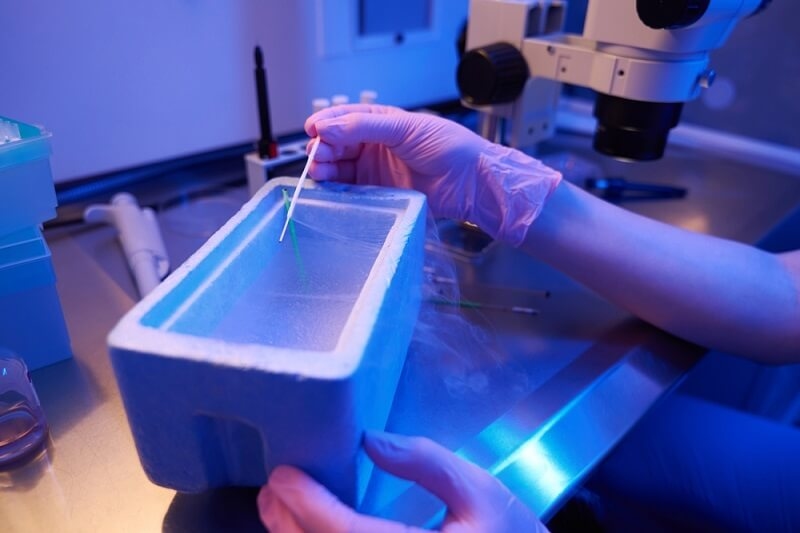
Thawing frozen embryos happens in the lab on or close to the transfer day. Embryos are warmed carefully and monitored closely.
Modern freezing methods have made thawing frozen embryos much safer than it was years ago. Most embryos survive the process, although no lab can guarantee survival for every embryo.
Once thawed, the embryo is checked for signs of continued development. If it meets quality standards, it is prepared for transfer within a short time window.
The frozen embryo transfer procedure is quick and does not involve surgery. A thin catheter is used to place the embryo into the uterus while ultrasound helps guide placement.
Most people are surprised by how simple it feels compared to the rest of IVF. There is usually no anesthesia, and discomfort is minimal.
After a short rest, patients can return home the same day.
Top pick: 10 Differences in Fertility Egg Freezing vs Embryo Freezing
The period after frozen embryo transfer is often the hardest emotionally, even though physically it is usually uneventful.
Feeling nothing is common and does not mean the transfer failed.
Implantation typically happens several days after transfer. Some people notice subtle changes, while others notice nothing at all. Both experiences are normal.
Blood testing is usually done 10 to 14 days after frozen embryo transfer. Testing earlier often causes unnecessary stress and unreliable results.
FET success rates depend on multiple factors, not just the procedure itself.
Important factors include:
On average, FET success rates range from about 30 to 60 percent per transfer. Younger patients often fall on the higher end of that range. Blastocyst-stage embryos also tend to have better outcomes.
Many clinics now report frozen embryo transfer success rates that match or slightly exceed fresh IVF transfers, especially when the uterus is well prepared.
Understanding these points helps set realistic expectations.
Also check: Learn The Process and Benefits Of Frozen Embryo Transfer
For many patients, an IVF frozen cycle offers a calmer and more controlled approach to IVF. The focus shifts from stimulation to implantation, which often feels more manageable.
Frozen embryo transfer does not guarantee pregnancy, but it gives embryos created earlier a real chance at success. Knowing how the process works removes a lot of the uncertainty that surrounds it.
Below are short answers to common questions patients ask about frozen embryo transfer.
Embryos can remain frozen for many years without losing quality if stored properly in a fertility lab.
In many cases, FET success rates are similar or slightly higher because the uterus is not affected by stimulation hormones.
Most embryos survive thawing frozen embryos with modern techniques, though a small number may not.
This content was created by AI